
The National Etruscan Museum of Villa Giulia is an Italian State Museum dedicated to the Etruscan and Faliscan civilizations: it houses in particular artifacts from southern Etruria, i.e. the territory corresponding to Upper Latium, between the Tiber and the Tyrrhenian Sea, a place extremely rich in testimonies from different periods and different civilizations (Etruscan, Greek, Phoenician, Faliscan), being a natural meeting point, a crossroads of traffic along the main communication routes of the central Mediterranean.
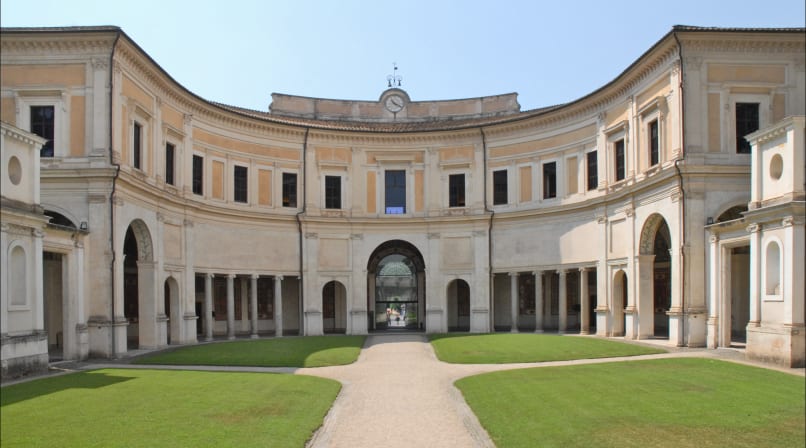
Today, the ETRU, one of the most representative museums of Etruscan art, is housed in two splendid Renaissance villas: Villa Giulia, a museum since 1889, and Villa Poniatowski.
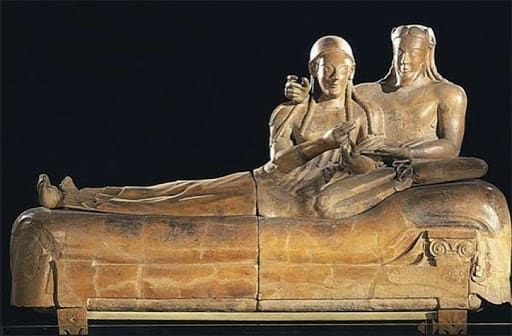
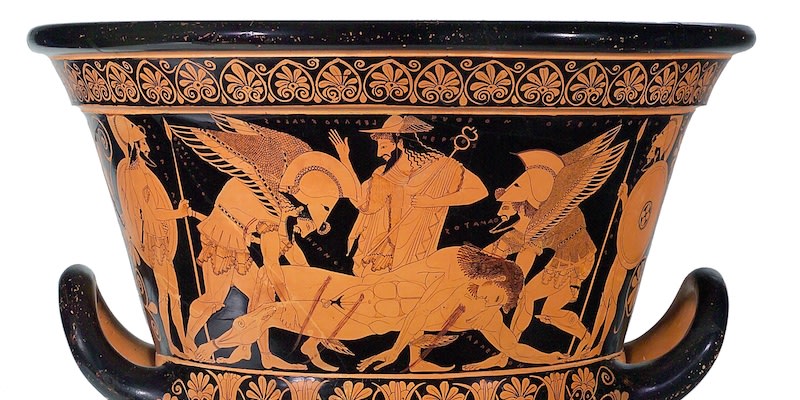
The exhibits are displayed according to a topographical criterion, starting from the contexts of Vulci, Bisenzio, Veio and Cerveteri. Among the best known works are bronzes from Vulci, terracotta decorations from the Sanctuary of Portonaccio in Veio, including the famous Apollo (6th century B.C.), and the sarcophagus of the spouses from Cerveteri. The gold foils from Pyrgi (Santa Severa) with Etruscan and Phoenician inscriptions (from the late 6th century B.C.) and the high relief of the Fictile pediment, also from Pyrgi, with the myth of the "Seven against Thebes" (first half of the 5th century B.C.) are also noteworthy.
Private collections, on the other hand, are organized according to typological criteria. Among the latter, the Barberini collection, the Pesciotti collection and the Castellani collection, which includes some very important pieces of jewelry for the study of Etruscan goldsmithing, are worthy of mention.
Of great interest is the Falisco-Capenate section, which contains material from the centers of the middle Tiber Valley, such as Corchiano, Vignanello, Nepi, Narce and, in particular, Falerii Veteres (Civita Castellana), with terracotta sculptures, including the extraordinary Apollo dello Scasato, from the decorations of sanctuaries in the area.
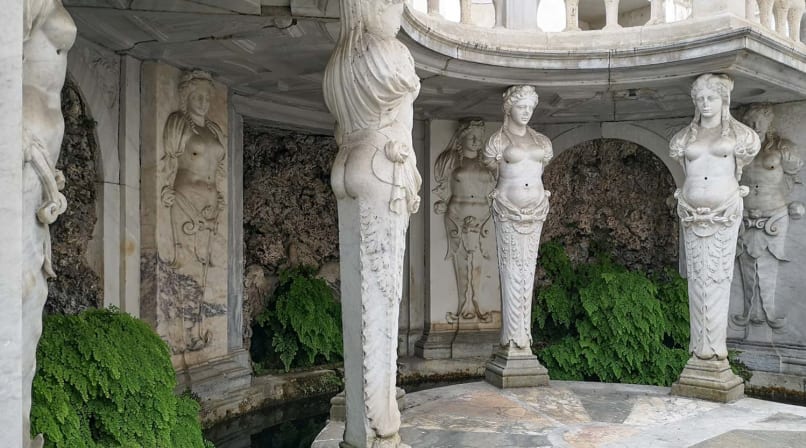
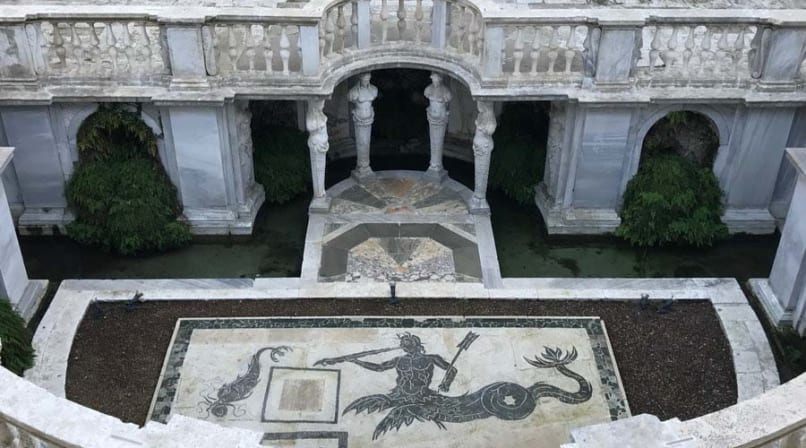
The museum offers numerous itineraries that also allow visitors to admire the underground rooms of the villa, such as the Nymphaeum, the remains of the Aqueduct of the Virgin (Augustan period) and the "neviera" of Pope Julius III.
In addition, between 1889 and 1890, a life-size replica of the Temple of Alatri, an Etruscan-Italian temple dated between the 3rd and 2nd centuries B.C., was erected in the gardens of Villa Giulia.
Villa Giulia, built by Pope Julius III, Giovanni Maria Ciocchi del Monte, between 1550 and 1555, is divided into two courtyards separated by a nymphaeum in whose construction great artists such as Giorgio Vasari, Jacopo Barozzi da Vignola, Bartolomeo Ammannati and Michelangelo Buonarroti participated. Part of the decoration is the work of Taddeo Zuccari and Prospero Fontana.
The hemicycle is decorated with delicate pictorial interventions inspired by the grotesques of the Domus Aurea. The rooms contain an extraordinary cycle of frescoes depicting the Seven Hills of Rome.